What can be done about antibiotic resistance?

Tuesday, November 16, 2010
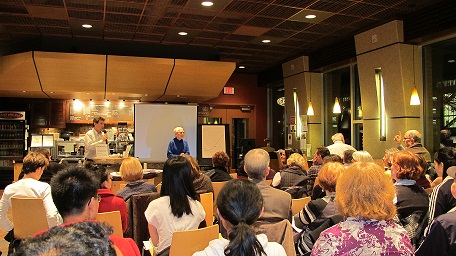
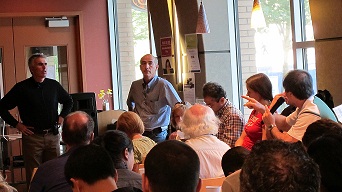
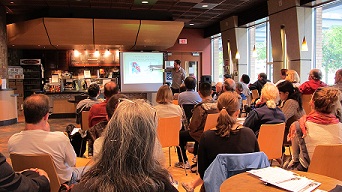
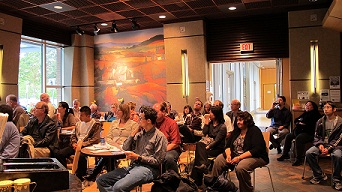
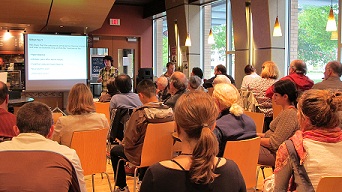
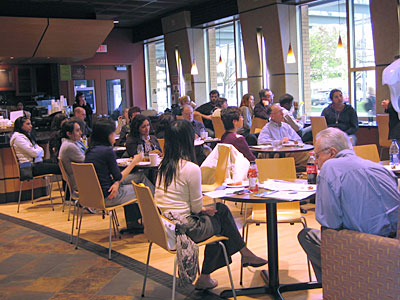
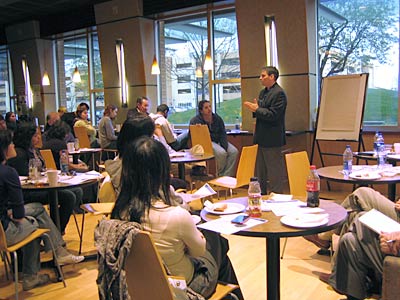
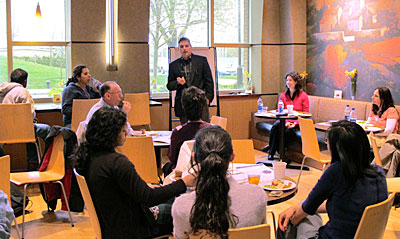
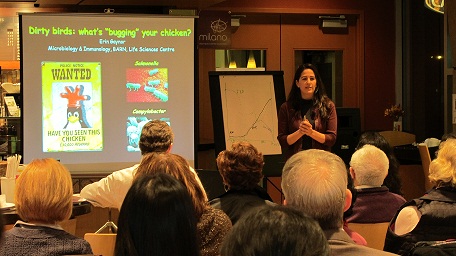
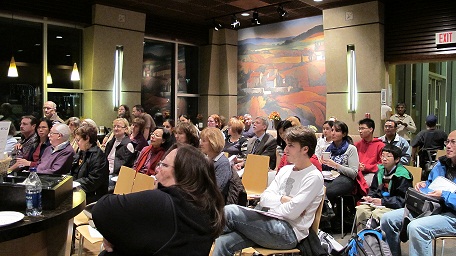
On November 16, 2010, the University of British Columbia Life Sciences Institute (LSI) hosted the fifth LSI Café Scientifique at the Cafe Perugia. Over 56 interested community members, students and faculty gathered for an informal and participatory dialogue with experts on the topic of “What can be done about antibiotic resistance?”

The Café featured members of the Bacterial Adaptation & Response Networks (BARN) and Chemical Biology of Disease (CBD) Research Groups who are studying and investigating how bacteria adapt and respond to their environment. The interactive session was presented by Dr. Julian Davies and Dr. Erin Gaynor of Department of Microbiology & Immunology. An additional presentation was given by Dr. Linda Hoang, Medical Microbiologist, Program Head of Bacteriology & Mycology at the BC Centre for Disease Control, Public Health Microbiology & Reference Laboratory of Provincial Health Services Authority.

Antibiotics have been successful in curing many infectious diseases over the past 60 years. However, antibiotic resistance is increasing rapidly and there is concern that we are approaching the end of the era of antibiotic effectiveness. This impacts all bacterial diseases, from deadly infection caused by MRSA and tuberculosis to serious illness you can acquire from common foods. Drs. Davies and Gaynor highlighted and answered questions concerning the rise in multi-antibiotic resistance in recent times and the mechanisms of resistance.
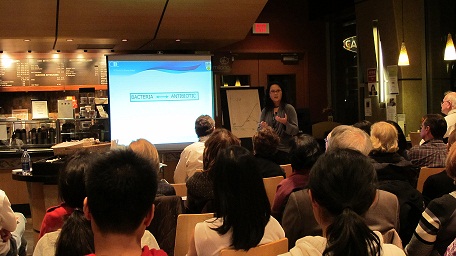
Dr. Gaynor discussed the problem of human infection by Campylobacter carried in chickens and how this impacts human health, as well as tracking resistance and improving public education. Dr. Hoang gave a brief overview of how bacteria are recovered from patient samples, how susceptibility profiles are generated from the methods in place and presented a summary of provincial findings.

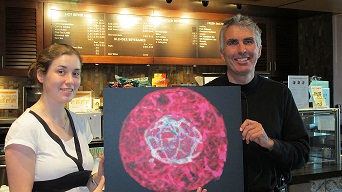
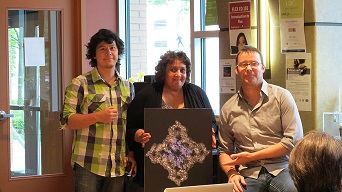
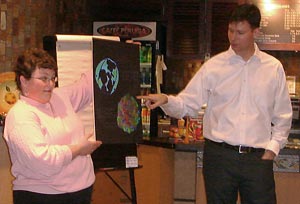
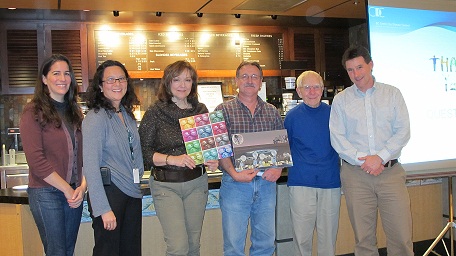
Two mounted photomicrographs, entitled “StreptoArt” and “Planet Microbe” were supplied by Dr. Davies of the CBD Research Group, were given away as door prizes to two members of the audience. Dr. William Mohn, Professor of the Department of Microbiology & Immunology, BARN Research Group Leader, served as moderator.

The LSI Café Scientifique is co-sponsored by the Life Sciences Institute (LSI), CIHR, MSFHR, Faculty of Medicine Research Office, and Café Perugia (UBC Food Services).
‘Fingerprinting’ Cancer for Personalized Medicine

On August 10, 2010, the University of British Columbia Life Sciences Institute (LSI) hosted the fourth LSI Café Scientifique at the Cafe Perugia. Over 65 interested community members, students and faculty gathered for an informal and participatory dialogue with an LSI expert on the topic of “Fingerprinting” Cancer for Personalized Medicine.

The Café featured Dr. Calvin Roskelley, leader of the LSI Cell and Developmental Biology Research Group, Director of Solid Tumor Progression Unit and Co-Acting Head & Associate Professor in the Department of Cellular and Physiological Sciences. The interactive session highlighted new approaches to cancer analysis and treatment using “genetic fingerprinting”, and how this is paving the way for “personalized” approaches to prevention, early diagnosis and treatment of cancer. Dr. Roskelley provided an overview of his research, discussed his group’s findings and answered questions about breast cancer and metastasis, how tumor formation is caused by cell growth and the breakdown of cellular architecture (‘destroying grape clusters’) and how different researchers at the LSI are making discoveries to understand and treat this serious health problem. Dr. Roskelley emphasized how continuing support from the Canadian Cancer Society throughout his time as a trainee and career as a research professor allowed him to study with renowned scientists in the cancer field and establish his lab at UBC. One of Dr. Roskelley’s microscopic images of a tissue-engineered mammary epithelial spheroid outside the body in a cultural dish (a.k.a. a ‘grape cluster’) was supplied by Dr. Roskelley and his lab trainees, and the image was given away as a door prize to one member of the audience.

The LSI Café Scientifique is co-sponsored by the Life Sciences Institute, CIHR, MSFHR, Faculty of Medicine Research Office, the Canadian Cancer Society and Café Perugia (UBC Food Services).
Electrical Signaling in the Heart and Body: Understanding Cardiac Disease

On May 25, 2010, the University of British Columbia Life Sciences Institute (LSI) hosted the third LSI Café Scientifique. Over 40 students, faculty, and interested community members gathered for an informal and participatory dialogue with UBC experts on the topic of “Electrical Signaling in the Heart and Body: Understanding Cardiac Disease”.

The Café featured members of the Cardiovascular Research Group who are studying how the heart operates and how heart contraction is controlled. The interactive session was presented by Dr. Christopher Ahern, Assistant Professor in the Dept of Anesthesiology, Pharmacology and Therapeutics and the Dept of Cellular and Physiological Sciences. An additional presentation was given by Dr. Sebastian Brauchi who has been awarded the 2010-2011 LSI Visiting Scientist Award to work in the laboratory of Dr. Ahern in the Cardiovascular Research Group. Dr. Brauchi comes from Universidad Austrade de Chile and performed his post-doctoral studies at Harvard in the laboratory of Dr. David Clapham, a world leader in the field of ion channels. As the population ages, cardiac arrhythmias are on the rise, with a predicted doubling in the next 50 years. Drs. Ahern and Brauchi showed images of their research, discussed their findings and answered questions about the mechanisms governing electrical signaling in the body and how research at the LSI is helping understand and treat this growing health problem. An artist’s rendition of the “Ryanodine Receptor”, the largest ion channel currently known, was supplied by Dr. Filip Van Petegem, another researcher in the Cardiovascular group and this image was given away as a door prize to one member of the audience. Dr. Van Petegem also provided an overview of his ion channel research in a poster presentation.

The LSI Café Scientifique is co-sponsored by the Life Sciences Institute, CIHR, MSFHR, Faculty of Medicine Research Office and Café Perugia (UBC Food Services). Upcoming Café topics include one on the biology of cancer.
Inside the fight against the Flu pandemic

Tuesday, April 13, 2010

On April 13, 2010, the University of British Columbia Life Sciences Institute (LSI) hosted the second LSI Café Scientifique. Over 40 students, faculty, and interested community members gathered for an informal and participatory dialogue with UBC experts on the topic of “Inside the fight against the Flu pandemic”.

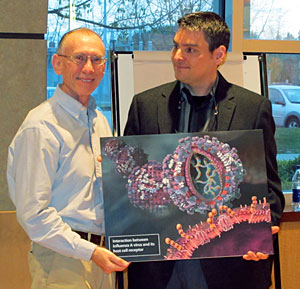
The Café featured members of the Facility for Infectious Disease and Epidemic Research (FINDER) and the interactive session was presented by Dr. Francois Jean, Scientific Director of FINDER. Additional comments were supplied by Dr. Sandra Deiderich, CIHR Post Doctoral Fellow. In light of the 2009 H1N1 Flu Pandemic, Drs. Jean and Deiderich, discussed the recent swine flu outbreaks and the research taking place at UBC and around the world to identify what makes these viruses unique and how we can prepare for the next pandemic. The session answered questions on the biology and evolution of the 2009 H1N1 virus and what drugs are being developed to combat the newly emerging drug-resistant Flu viruses. An artist’s rendition of a flu virus attaching to a cell was given away as a door prize to one member of the audience.

The LSI Café Scientifique is co-sponsored by the Life Sciences Institute, CIHR, MSFHR, Faculty of Medicine Research Office and Café Perugia (UBC Food Services). Upcoming Café topics include Cardiovascular Disease and Cancer.
Diabetes: Causes, Consequences and Cures?

Tuesday, January 26, 2010

On January 26, 2010, the University of British Columbia Life Sciences Institute hosted the inaugural LSI Café Scientifique. Over 40 students, faculty, and interested community members gathered for an informal and participatory dialogue with UBC experts on the topic of “Diabetes: Causes, Consequences and Cures?” The venue, Café Perugia, provided the perfect setting for an opportunity to learn about the latest ideas and breakthroughs in life sciences research and technology in a relaxed and casual setting.

The Café featured members of the LSI Diabetes Research Group, who are studying both type 1 and type 2 diabetes. Professors Timothy Keefer and Suzanne Clee, both from the Department of Cellular & Physiological Sciences, provided an overview of current challenges and strategies that are being used to determine what causes diabetes and new treatments that are being explored. Professor Roger Brownsey, Head of the Department of Biochemistry & Molecular Biology, served as moderator.

Upcoming Café topics include Flu Pandemic and Cancer. The LSI Café Scientifique is co-sponsored by the Life Sciences Institute, CIHR, MSFHR, Faculty of Medicine Research Office and Café Perugia (UBC Food Services).
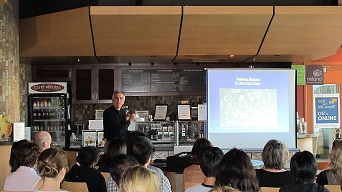
Cafe Caters to Folks with Taste for Science

Taken from The Campus Resident – May 2010

The newest ‘cafe’ at the Universi­ty of British Columbia opens only once a month, and stays open for only 90 minutes at a time.

In these short sessions, however, the cafe offers members of the public looking for information about the latest scientific research (in the field of health sciences) a very tasty menu.

Welcome to the Cafe Scienti­fique at UBC, which held its third monthly session on May 25 (Un­derstanding Cardiac Disease) and which looks forward to offering further intellectually-nutritious sessions on campus in the months to come!

The global phenomenon called ‘Cafe Scientifique’ began in the United Kingdom over ten years ago, and based on the earlier Phi­losophers’ Cafe movement found­ed in France, its popularity quickly spread.

In Canada, Cafe Scientifiques have opened in a dozen cities, in­cluding Vancouver where one has been held at the Railway Club, 579 Dunsmuir Street for the last two years.

Now, the Life Sciences Institute (LSI) has opened a Cafe Scienti­fique at UBC with sessions held in a real UBC cafe, namely the Cafe Pe­rugia, a 40-seat establishment locat­ed in the Life Sciences Centre, the largest building on campus, located at 2350 Health Sciences Mall.

The growing engagement of the public in science, particularly life science given its direct impact of health and life, provides the plau­sible basis for Cafe Scientifiques, says Christian Naus, LSI director. “In the midst of hearing about the devastating effect of many illness­es, people are seeking information about the causes of disease and im­provements in treatment.

“The LSI Cafe Scientifique will provide meaningful opportunity for the public to interact with not only the expert scientists, but also ‘special guests’ who will share their personal experience with the illness discussed. ”

The prestigious Life Sciences Insti­tute provides an ideal environment, both physically and scientifically, for a Cafe Scientifique. It stands at an easily-accessible part of campus, next to residential neighbourhoods which are home to a growing popu­lation of all age groups-including both elementary and high school students. Scientifically, research at the LSI spans a wide range of health-related scientific topics, and for these reasons, Dr. Naus and As­sociate Director Linda Matsuuchi successfully applied for funds to underwrite the Cafe program from the Canadian Institute of Health Research.

The innovative, multi-department LSI employs 87 principal investi­gators from fin departments in the Faculty of Medicine and Faculty of Science, and its stated goal “is to generate and sustain interdisciplin­ary research dedicated to discover fundamental biological processes of life.”

The LSI research groups focus on several major themes, including cardiovascular systems, diabetes, oncology, developmental biology, microbiology, infectious diseases, immunity, inflammation, cell biol­ogy and gene expression. Dr. Mat­suuchi says, “Most projects have a strong relevance to the public and are well suited for outreach activi­ties such as the Cafe Scientifique.”

The noble objectives of the Cafe Scientifique at UBC, said its LSI promoters in their application for funding from the Canadian Institute for Health Research, “is to provide an integration point where the pub­lic will meet expert scientists, train­ees and individuals who are suffer­ing from the health concerns.”In an informal setting, the science behind the diseases and its impact will be discussed.

“As such, it is consistent with CHIR objectives to ‘establish an accessible/informal discussion be­tween the general public and scien­tists about the value and impact of health research on the health of Ca­nadians, the health care system and the economy as a whole.”

The first Cafe Scientifique at UBC on January 26 drew 30-40 people to the Cafe Perugia to hear two researchers from the LSI answer questions and provide the formation about ‘Diabetes: Causes, Consequences and Cures?’ A similar event followed April 13 when two LSI researchers reported the latest information from ‘inside the fight against the Flu pandemic’. The May 25 session-held after publication deadline-bears the title ‘Electric Signaling in the Heart and Body: Understanding Cardiac Disease.’

The newest cafe at UBC provides not only intellectual fare for free. Coffee/tea/juice and tasty sand­wiches and cakes come with infor­mation about the latest news from the world of medical research. Those wishing to register for a Cafe Scientifique session should contact the Life Sciences Institute.

(Readers should contact Theresa Lung at tlung@interchange.ubc.ca or 604-827-4781 if they wish to get an invitation to attend a session at the Cafe.)

Full House in Café Hears Talk of Heartbeats

Taken from The Campus Resident – June 2010

The passionate dislike of Christopher Ahern for ‘bad cells’ came across clearly during the third session of the UBC Café Scientifique May 25th.

A full house of 50 invited members of the public attending this casual presentation of medical research in the real-life Café Perugia on campus heard Chris, a principal investigator with the Life Sciences Institute, describe how bad cells in a heart can interfere with its production of proper heartbeats.

Chris called the heartbeat “an electrical symphony,” and explained how even a single bad cell can turn this masterpiece of bodily music into arrhythmia, a condition of irregular heartbeats.

The dire prospect of someone developing arrhythmia increases with age, and so the aging population of Canada makes arrhythmia a condition about which the medical profession is growing more and more concerned. Chris said 250,000 Canadians suffer from various forms of arrhythmia. He estimated the number will double over the next fifty years.

The grim news about heart complaints gets grimmer with talk of statistics unfortunately. A third of all deaths in Canada now come from ‘events’ having to do with the heart with $25 billion a year spent on medical responses to these cardiac events. Chris said 400,000 patients in Canada suffer from some kind of heart problem with the number growing by 50,000 patients a year.

At least the bad news on the public health side seems counterbalanced by good news on the research side. A growing assault on cardiac diseases by world class researchers such as the UBC cardiovascular group—under the aegis of the Life Sciences Institute—has cast more and more light on their causes. His research, said Chris, focuses on “the basis for electrical signaling in the body.”

The so-called ‘cardiac cycle’ (a term referring to what happens in the heart from the beginning of one heartbeat to the beginning of the next), is coordinated by a series of electrical impulses that are produced by specialized heart cells, Chris said. A person of average longevity (say, 80 years) will experience 2.5 billion cardiac cycles in his or her lifetime. In studying the cardiac cycle, Chris Ahern and his team focus on “channels” as a way of regulating the movement of ions (electrical particles) into, and out of, the cells of nerve and muscle.

The second speaker of the evening Sebastian Brauchi, spoke of work done at the Laboratory of Sensory Physiology Instituto de Fisiologia, at the Facultad de Medicina Universidad Austral de Chile. A ‘Visiting Scholar’ award from the Life Sciences Institute has allowed Sebastian to come to UBC to teach and do research for the next six weeks.

Those wishing to register for a session of the Café Scientifique, sponsored by the Life Sciences Institute ay UBC, should contact Theresa Lung at tlung@ interchange.ubc.ca or 604-827-4781 if they wish to get an invitation to attend.

Coupled with intellectual substance, the casual format of the Café Scientifique idea has led to its rapid growth and acceptance around the world. A good portion of a Café session such as the ones at the Café Perugia goes to information-rich discussion between highly-qualified presenters and members of the public—sandwiches, cookies and coffee for free. The Life Sciences Institute, which co-ordinates the work of 850 researchers from a number of faculties, supports the Café Scientifique technique of disseminating information about medical research at UBC as a means both of reaching out to people eager for knowledge and promoting the high quality of research work done by its researchers.

MSFHR Supports Café Scientifique Series at UBC

As seen on the MSFHR website – March 2, 2011

Recently diagnosed with diabetes? Did H1N1 take you by surprise? Worried about bacteria in the food you eat? If you attended Life Sciences Institute’s (LSI) Café Scientifiques in 2010, you would have learned about new treatments for diabetes, preparations for future pandemics, how to minimize food contamination and more.

LSI is a research institute based at the University of British Columbia (UBC). Their goals include generating and sustaining innovative, interdisciplinary research dedicated to discovering fundamental biological processes of life; advancing our understanding of disease processes; and developing potential therapeutics. The Michael Smith Foundation for Health Research (MSFHR) is proud to co-sponsor LSI’s newest endeavour — the Café Scientifique program.

The Café Scientifique concept — informal gatherings where scientists talk in lay terms about a wide range of science topics, and where questions from the audience spark discussions — is popular in health research. According to LSI’s Director Dr. Christian Naus, this is the perfect time to introduce a café program within the UBC community.

“The public now, more than ever, wants to know about the impact of biological and medical research on their lives. The Café Scientifique provides an ideal forum for scientists to present the impact of their research in a format that allows for open dialogue with the public,” he says. “Our prime location [in Café Perugia, on the UBC campus] is also a great way to reach out to the local community living in the vicinity of the university.”

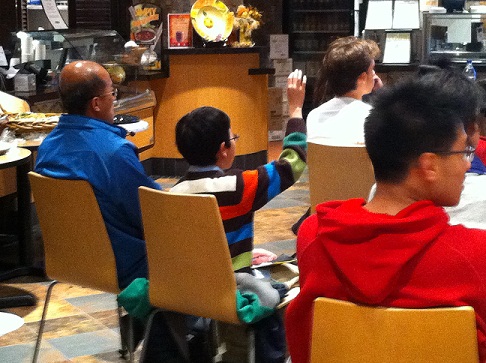
While café topics are often easily understood by research-oriented attendees, many of the audience members don’t have a science background. What makes the LSI cafés enjoyable, according to Naus, is the speakers’ humour, which helps engage a lay audience. Most café sessions in 2010 saw over 50 attendees, including students, faculty and community members of all ages. At a session on antibiotic resistance, a 10-year old boy raised his hand when the presenter asked the audience about the timing of the most bacterial food poisoning. “In the summer!” he said, citing summer picnics and less refrigeration of food.

Other LSI Café Scientifique topics covered in 2010, equally engaging for a wide-ranging audience, were Diabetes: Causes, consequences and cures; Inside the fight against the flu pandemic; Electrical signaling in the heart and body: Understanding cardiac disease; and Fingerprinting cancer for personalized medicine.

LSI is gearing up for their 2011 café series, which promises to be equally exciting. Sessions are typically held every other month and begin March 29 with a café on Memories in your genes; this is followed by one in May on E-natomy. Future topics include streamlining drug development, innovations in safe blood products and blood substitutes, and brain development. Exact dates and session topics are available soon on the LSI website. Sponsoring partners for 2011 are MSFHR, and UBC’s Faculties of Medicine and Science.